

What Should Homeowners Know Before Building a Deck in High-Risk Fire Zones?
 How Can Moisture Resistant Plasterboard Help Prevent Costly Water Damage and Mould Growth?
 What Factors Should Builders Compare When Selecting Modern Construction Boards?
Before you build a deck in a bushfire-prone area, you need three things: a current Bushfire Attack Level (BAL) assessment for your site, a design that leaves no gaps for embers, and materials rated for your BAL level. Skip any one of them and your certifier will knock the job back.
Decks matter more than most people expect. They sit right at the edge of the house, they collect leaves underneath, and they give embers a dry timber platform to land on.
Plenty of homes have survived a fire front only to burn down hours later because the deck caught. Using fire resistant decking removes that weak point, and it is one of the simplest upgrades you can make at design stage.
Why Bushfire Building Regulations Matter for Deck Construction?
Bushfire building regulations exist because attached structures are how most homes ignite. Radiant heat and direct flame get the attention, but ember attack causes the majority of house losses in Australian bushfires. A deck creates several risks at once:
- Dry leaf litter and bark collect in the subfloor cavity, out of sight and rarely cleaned
- Gaps between boards let embers drop straight into that fuel bed
- Timber boards ignite from radiant heat well before flames reach the house
- Burning decks push heat directly onto windows, doors, and wall cladding
- Balustrades, stairs, and pergolas add more combustible surface at the same point
Black Saturday in 2009 destroyed over 2,000 homes in Victoria and reshaped how Australia thinks about cladding, decking, and flooring. The current rules came out of those lessons.
How Bushfire Building Regulations Affect Deck Design?
Your BAL rating drives everything. An assessor looks at vegetation type, slope, separation distance, and your Fire Danger Index, then assigns a level from BAL LOW up to BAL FZ (Flame Zone). What each band means in practice:
- BAL 12.5 and 19: ember protection is the priority, so gaps and screening rules apply
- BAL 29 and 40: materials must resist increasing radiant heat, so timber choice narrows sharply
- BAL FZ: direct flame contact is expected, and only tested non-combustible systems will pass
Design decisions that follow from the rating include gap sizes between boards, screening of the subfloor, the distance the deck sits from the wall, and the materials used for joists, bearers, stairs, and balustrades.
Many homeowners find that a deck built to AS 3959 costs more in materials but far less in ongoing maintenance, because the boards do not warp, split, or need oiling every summer.
What Is Required for Decking Compliance?
Decking compliance means matching your build to AS 3959 and your local council conditions. Work through this list before you order anything.
- Get a written BAL assessment from a qualified assessor, since councils will not accept a guess.
- Check your planning permit conditions, because some councils add requirements beyond the standard.
- Confirm gap sizes, which are generally limited to 3mm at BAL 40 and Flame Zone unless the deck is fully sealed.
- Screen the subfloor with non-combustible mesh, usually 2mm aperture or finer, to block ember entry.
- Use compliant framing, meaning steel or a bushfire-resisting timber species for joists and bearers.
- Match the stairs, balustrades, and posts to the same rating as the deck itself.
- Keep evidence, including product test certificates and installation details, for your building surveyor.
That last point trips people up. Decking compliance is proved on paper, so a product without a test certificate to AS 1530.8.2 or AS 3959 is not usable at higher BAL levels regardless of how it performs.
How to Choose Decking Materials for Bushfire-Prone Areas?
Match the material to your rating, then to your maintenance appetite.
- Bushfire-resisting hardwoods such as spotted gum, blackbutt, or merbau are accepted up to BAL 29, but they still need regular oiling, and they burn under enough heat
- Composite timber boards vary widely, and many contain plastic binders that fail at higher BAL levels
- Fibre cement sheeting is non-combustible but heavy, brittle at the edges, and awkward to finish
- Magnesium oxide composite boards are mineral-based, non-combustible, and tested to the highest bushfire levels
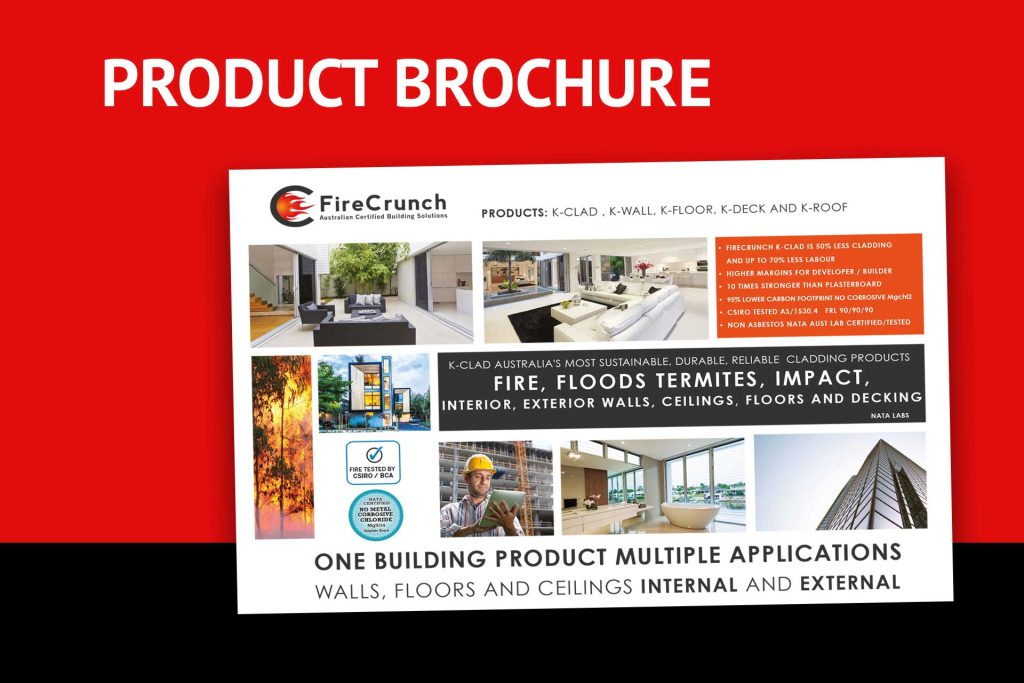
FireCrunch produces a magnesium oxide composite made from non-organic minerals, bonders, and fibre mesh, using non-corrosive magnesium sulphate rather than the chloride versions that attack steel fixings.
CSIRO testing covers AS 1530.4, AS/NZS 1530.8.2, and AS/NZS 3959, which address BAL FZ. The same board handles flood, termite attack, impact, and mould, which is why it also works as fire rated flooring inside the house.
Fire Safety Regulations That Influence Deck Construction
Fire safety regulations do not stop at the boards. They cover the whole assembly and how you look after it afterwards. Key requirements to plan for:
- Non-combustible screening on all subfloor openings and vents.
- Metal or bushfire-resisting timber framing, with fixings that will not corrode near the coast.
- Sealed junctions where the deck meets wall cladding, so embers cannot get behind the sheeting.
- Ember-proof detailing around gutters, downpipes, and any service penetrations.
- Clearance from combustible fences, sheds, woodpiles, and garden mulch.
Maintenance obligations matter just as much.
Most fire safety regulations assume a clean, well-kept structure, so councils expect you to clear leaf litter from the subfloor, keep gutters free, trim overhanging branches, and remove stored fuel from underneath.
A deck that meets fire safety regulations on paper still fails in a real fire if it is packed with dry leaves.
Why Fire-Resistant Decking Boards Are Becoming a Preferred Choice?
Because one product solves several problems at once. Homeowners in bushfire areas are tired of specifying different materials for fire, water, termites, and rot. Mineral-based decking boards deliver:
- Non-combustible performance tested to Australian standards by CSIRO and NATA laboratories
- Roughly ten times the strength of plasterboard, with high impact resistance underfoot
- Full resistance to termites, mould, mildew, and bacteria, since there is no organic content
- Stability after flooding rather than swelling, delaminating, or breaking down
- No annual oiling, sanding, staining, or board replacement
- Very low embodied carbon, at around 5% of conventional cement and plasterboard products
The insurance and resale picture helps too. Certified materials give you documentation that a buyer, a lender, or an insurer can actually check.
The same reasoning is pushing fire-resistant decking into new builds even in moderate BAL zones, simply because the whole-of-life cost works out lower.
Closing Thoughts
Building a deck in a high-risk fire zone comes down to doing things in the right order. Get the BAL assessment first, design to it second, then choose materials that carry the test certificates your surveyor needs.
A deck built this way protects the house rather than endangering it, and it will still look good in fifteen years without a weekend of sanding every spring.
If you want to check whether a board suits your BAL rating, or you need certification details for your building surveyor, call FireCrunch on 1300 933 102 or email sales@firecrunch.com.au.
Frequently Asked Questions (FAQs)
1. What bushfire building regulations apply when building a deck?
AS 3959 is the main standard, applied through your state building code and any extra council permit conditions. It sets the material, gap, screening, and framing requirements based on your assessed BAL rating, and covers attached structures including decks, stairs, and balustrades.
2. How does a Bushfire Attack Level (BAL) assessment affect deck design?
The BAL rating decides which materials you can use and how tightly the deck must be sealed. At BAL 12.5 and 19, you are mainly blocking embers. At BAL 40 and Flame Zone, gaps generally drop to 3mm or the deck is fully enclosed, and only tested non-combustible systems will pass.
3. What should homeowners consider for decking compliance in bushfire-prone areas?
Get the BAL assessment in writing, check council conditions, confirm gap and screening requirements, use compliant framing and fixings, and keep every product test certificate. Decking compliance is assessed on documentation, so a product without certification cannot be approved at higher BAL levels.
4. Which decking materials are better suited for high-risk fire zones?
Bushfire-resisting hardwoods work up to BAL 29 with regular maintenance. Above that, non-combustible options such as magnesium oxide composite boards or fibre cement are the practical choices, with MgO composites also handling flood, termite, mould, and impact exposure in the same sheet.
5. How can fire safety regulations influence deck construction and maintenance?
They shape the framing, screening, junction detailing, and clearances at build stage, then set expectations for upkeep. Clearing subfloor leaf litter, cleaning gutters, trimming overhanging branches, and keeping firewood and mulch away from the structure all matter, because a compliant deck full of dry fuel still burns.